







For more than 25 years, the Hadhad family made chocolate in Damascus. Their factory employed about 30 people and shipped sweets across the Middle East. Then, in 2012, a bombing destroyed it.
The family fled to Lebanon and spent about three years as refugees. In the winter of 2015-16 they arrived in a small town in Nova Scotia with almost nothing. Within a year, their new chocolate business employed 10 people. That business is Peace by Chocolate.
A family business, lost to war
Isam Hadhad (his name is also spelled Assam in some reports) started making chocolate in his home kitchen in Damascus in 1986, according to UNHCR. He grew it into a factory with about 30 employees. Prime Minister Justin Trudeau later described it to world leaders as “a chocolate factory that employed 30 people.”
The factory was destroyed in a bombing in late 2012, the company says. His eldest son, Tareq, was studying to become a doctor. He had to abandon his studies when the family fled to Lebanon, The Canadian Press reported.
Starting over in Antigonish
Tareq landed in Canada in December 2015, and his parents and siblings followed about three weeks later, UNHCR reported. A group of residents in Antigonish, N.S., had come together to sponsor the family.
So the family did what they knew. Just weeks after arriving, they started making chocolate in their home kitchen. Within months they were selling it at farmers’ markets, CBC News reported.
In August 2016, they opened a tiny factory in a shed that local volunteers helped build, CBC News and The Globe and Mail reported.
The moment the world noticed
When wildfires forced the evacuation of Fort McMurray, Alta., in 2016, the new business donated profits to relief efforts, according to The Canadian Press and UN News. In September 2016, Trudeau told the family’s story at the United Nations Leaders’ Summit on Refugees in New York.
From a shed to a factory
- January 2017: one year after arriving, the family was financially independent and employed 10 people, CBC reported.
- September 2017: Peace by Chocolate opened a new, larger factory in Antigonish.
- 2018: the company had hired roughly 25 to 35 people, according to CBC and The Globe and Mail.
- 2019: it pledged to hire 50 refugees by 2022 and mentor 10 refugee-run startups.
- January 2020: Tareq Hadhad became a Canadian citizen.
- 2020-2021: the family’s story was told in a book and a feature film, both called Peace by Chocolate.
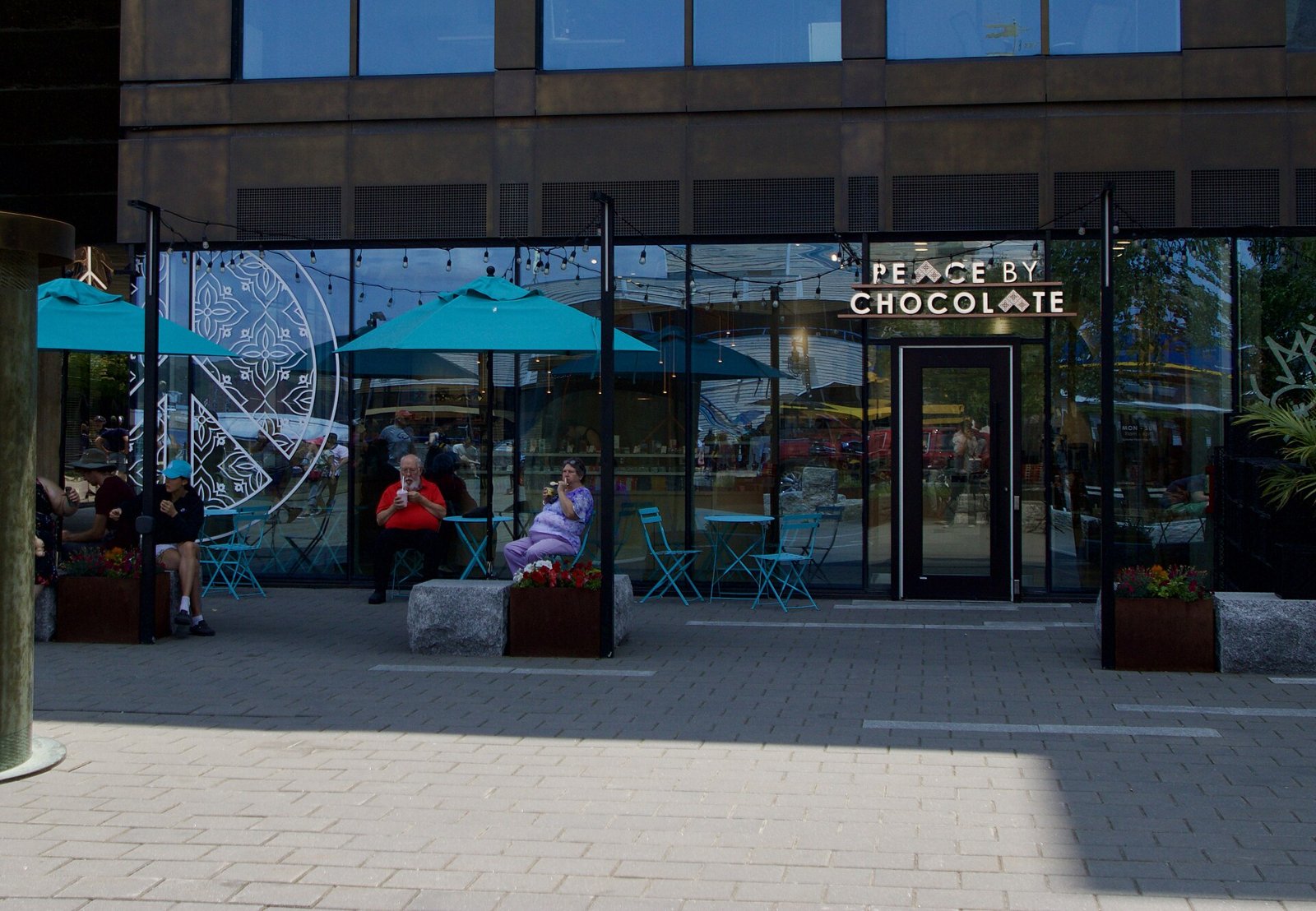
Today the company sells across Canada and online, and runs a shop on the Halifax waterfront as well as in Antigonish. It says it donates 3% to 5% of profits to the Peace on Earth Society, a Nova Scotia organization that funds peace-building projects.
What their story teaches new founders
- Bring your skill with you. The family lost their factory, but not their recipes or know-how.
- Start smaller than you think. A kitchen, then a farmers’ market, then a shed. Each step proved there was demand before they spent more.
- Your community is your first market. Neighbours were their first customers, builders and promoters.
- Give back early. Their generosity became part of the brand story people wanted to support.
Practical help if you want to start a business in Canada
- Futurpreneur (ages 18 to 39): Canadian citizens and permanent residents can apply for an equity-free startup loan of up to $75,000 (up to $25,000 from Futurpreneur, with up to $50,000 more possible from BDC), plus up to two years of one-on-one mentorship. Details on futurpreneur.ca.
- Start-up Visa: paused. If you’re abroad and hoping to immigrate as a founder, know that Canada’s Start-up Visa Program is not accepting new applications, according to canada.ca. Ottawa has said a replacement pilot for entrepreneurs is coming, but as of mid-November 2026 IRCC could not confirm when details will be released, BetaKit reported. Be wary of anyone selling a “guaranteed” business visa.
- Newcomer and refugee support: settlement agencies in your area can help with language, jobs and local business contacts. Ask yours about small-business workshops.
Just arrived? Start with our guide to benefits newcomers can claim in their first year, including the Canada Child Benefit.
FAQ
Who founded Peace by Chocolate?
The Hadhad family, Syrian refugees who resettled in Antigonish, Nova Scotia. Isam Hadhad ran a chocolate business in Damascus for decades, and his son Tareq is the company’s CEO.
When did the Hadhad family come to Canada?
Tareq arrived in December 2015, and the rest of the family followed about three weeks later.
Where is Peace by Chocolate made?
In Antigonish, Nova Scotia, where the company opened a factory in 2017. It also has a shop on the Halifax waterfront.
Is there a movie about Peace by Chocolate?
Yes. Peace by Chocolate is a feature film based on the family’s story. There is also a book of the same name.
Sources: Peace by Chocolate: Our Story; CBC News, Syrian chocolatier opens factory in Antigonish (Aug. 2016); CBC News, Trudeau shares family’s story in UN speech (Sept. 20, 2016); CBC News, refugees to employers in one year (Jan. 7, 2017); The Canadian Press via CBC (Mar. 13, 2017); CBC News, new factory (Sept. 9, 2017); The Globe and Mail (Feb. 12, 2018); CBC News, pledge to hire refugees (Feb. 15, 2019); UNHCR Canada (Jan. 28, 2020); CBC News, citizenship (Jan. 15, 2020); UN News (Feb. 14, 2025); Futurpreneur Startup Program; IRCC: Start-up Visa Program; BetaKit (Nov. 16, 2026).
Photo: Peace by Chocolate shop, Halifax. Hayden Soloviev, CC BY 4.0, via Wikimedia Commons.