








In 1957, a young Hungarian refugee stepped off a freighter in Quebec City. He had no money and no job waiting. An immigration officer handed him five dollars and wished him luck, according to the company he went on to build.
His name was Frank Hasenfratz. What he did have was a trade: he was a trained toolmaker and machinist. He used it to start a one-man machine shop in the basement of his home near Guelph, Ont. That shop became Linamar, which now has more than 36,000 employees and reported more than $10 billion in sales in 2025.
Fleeing Hungary after 1956
Hasenfratz was born in Hungary in 1935 and trained in trade and engineering schools while working as a toolmaker and machinist, Linamar says. When Soviet troops crushed the Hungarian uprising of 1956, he decided to leave.
He went to Austria and then Italy, where he worked as a translator in refugee camps, The Globe and Mail reported. In the French port of Le Havre, he met sailors who said he could get passage to North America if he worked on their freighter. He signed on. That ship brought him to Quebec City in 1957.
A skill instead of savings
“He arrived without means but with something more important, a skill,” his family wrote in his memorial. He settled in Guelph and worked as a supervisor at a local manufacturer, Sinterings Ltd., according to Linamar.
On the side, he built parts in his basement. Linamar dates its founding to 1966, when Hasenfratz was running it as a one-man operation out of his family home north of Guelph. He named the company after his daughters, Linda and Nancy, and his wife, Margaret, The Globe and Mail reported.
From one man to a global manufacturer
- Then: one man and his machines in a home basement.
- 2022: about 26,000 employees when he died, Linamar said.
- 2025: more than 36,000 employees in 86 manufacturing locations in 19 countries, and sales of more than $10.2 billion, according to Linamar’s 2025 annual report.
Linamar makes parts for vehicles, as well as Skyjack aerial lifts and MacDon farm equipment. It trades on the Toronto Stock Exchange.
His legacy
Hasenfratz was named Canadian Entrepreneur of the Year, inducted into the Canadian Business Hall of Fame and appointed to the Order of Canada, Linamar said. He gave to the Guelph General Hospital and other local causes. His daughter Linda Hasenfratz was Linamar’s CEO when he died at home in Guelph on January 8, 2022, at age 86.
The Financial Post remembered him as “the ultimate optimist,” a man with less than $5 to his name who never stopped looking for opportunity.
What his story teaches new founders
- A trade is portable wealth. Hasenfratz couldn’t bring money, but he brought skills that were in demand anywhere.
- Keep your day job while you test the idea. He worked as a supervisor while building parts on the side.
- Start where you are. A basement was enough to prove the business.
- Think long term. Linamar grew over decades, not months.
Practical help if you want to start a business in Canada
- Futurpreneur (ages 18 to 39): Canadian citizens and permanent residents can apply for an equity-free startup loan of up to $75,000 (up to $25,000 from Futurpreneur, with up to $50,000 more possible from BDC), plus up to two years of one-on-one mentorship. Details on futurpreneur.ca.
- Start-up Visa: paused. If you’re abroad and hoping to immigrate as a founder, know that Canada’s Start-up Visa Program is not accepting new applications, according to canada.ca. Ottawa has said a replacement pilot for entrepreneurs is coming, but as of mid-November 2026 IRCC could not confirm when details will be released, BetaKit reported. Be wary of anyone selling a “guaranteed” business visa.
- Skilled trades: if you have trade experience from abroad, ask your province’s apprenticeship or trades authority how to get it assessed. Certification can open better-paying jobs while you plan a business.
Working while building something on the side? Our Canada Workers Benefit guide explains who qualifies for extra money on a low income, and our newcomer benefits guide covers your first year.
FAQ
Who founded Linamar?
Frank Hasenfratz, a Hungarian refugee who came to Canada in 1957. He started the company as a one-man shop near Guelph, Ontario; Linamar dates its founding to 1966.
Where does the name Linamar come from?
It combines the names of his daughters Linda and Nancy and his wife Margaret.
How big is Linamar today?
Linamar reported more than 36,000 employees and sales of more than $10.2 billion in 2025.
When did Frank Hasenfratz die?
He died at his home in Guelph on January 8, 2022, at age 86.
Sources: Linamar: Passing of Founder Frank Hasenfratz (Jan. 8, 2022); Linamar: Our History; Linamar: Frank Hasenfratz memorial; The Globe and Mail (Jan. 9, 2022); Financial Post (Jan. 10, 2022); GuelphToday (Jan. 8, 2022); Budapest Business Journal (Aug. 12, 2023); The Globe and Mail (Sept. 2, 2026); Linamar 2025 Annual Report; Futurpreneur Startup Program; IRCC: Start-up Visa Program; BetaKit (Nov. 16, 2026).
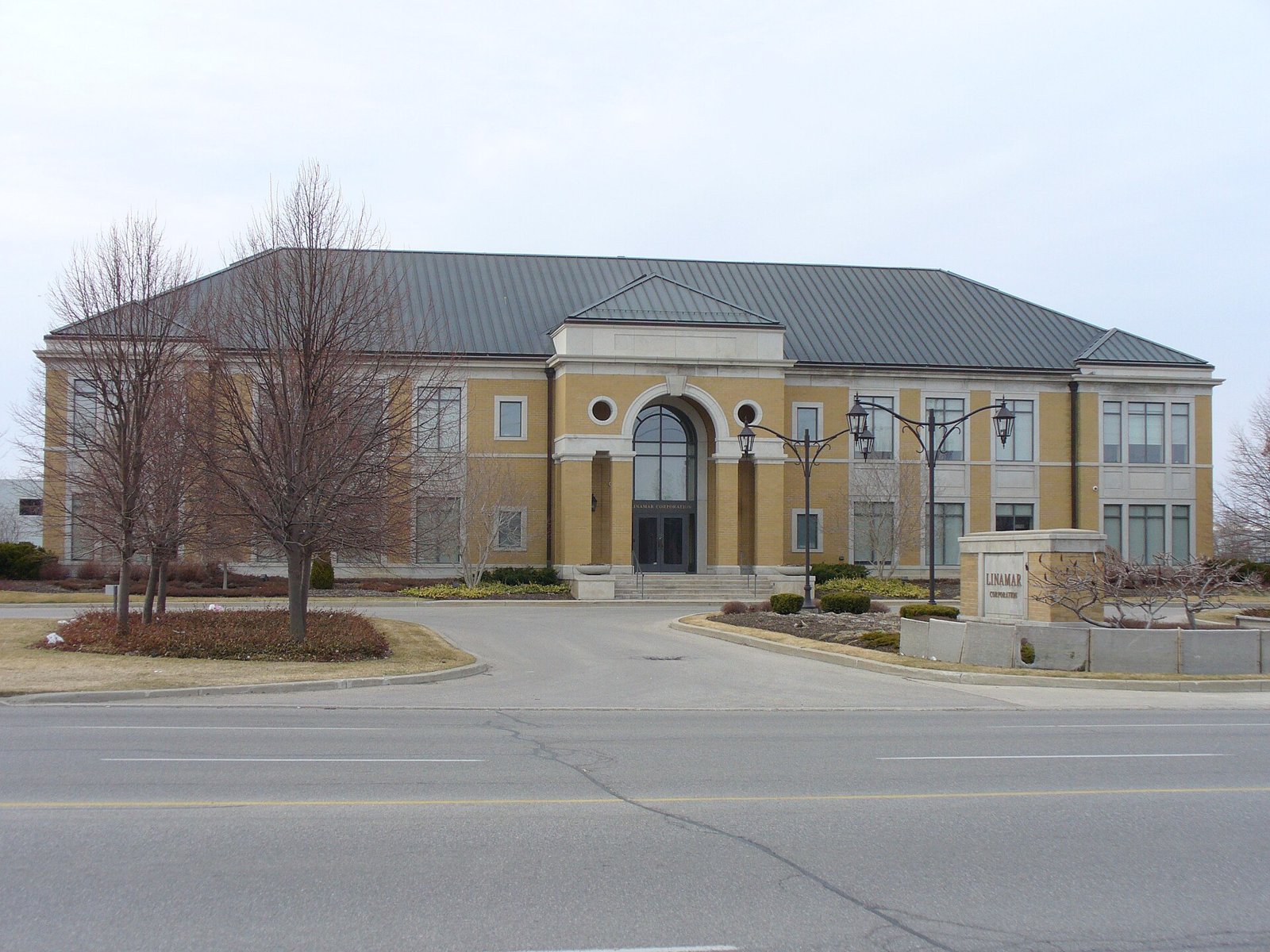
Photo: Linamar head office, Guelph, Ontario. Tabercil, CC BY 3.0, via Wikimedia Commons.